The Hypothesis Primer: Current State of the Climate Debate
An objective, plain-language summary of the climate debate for those who want their own understanding, rather than just trusting the opinions of others.

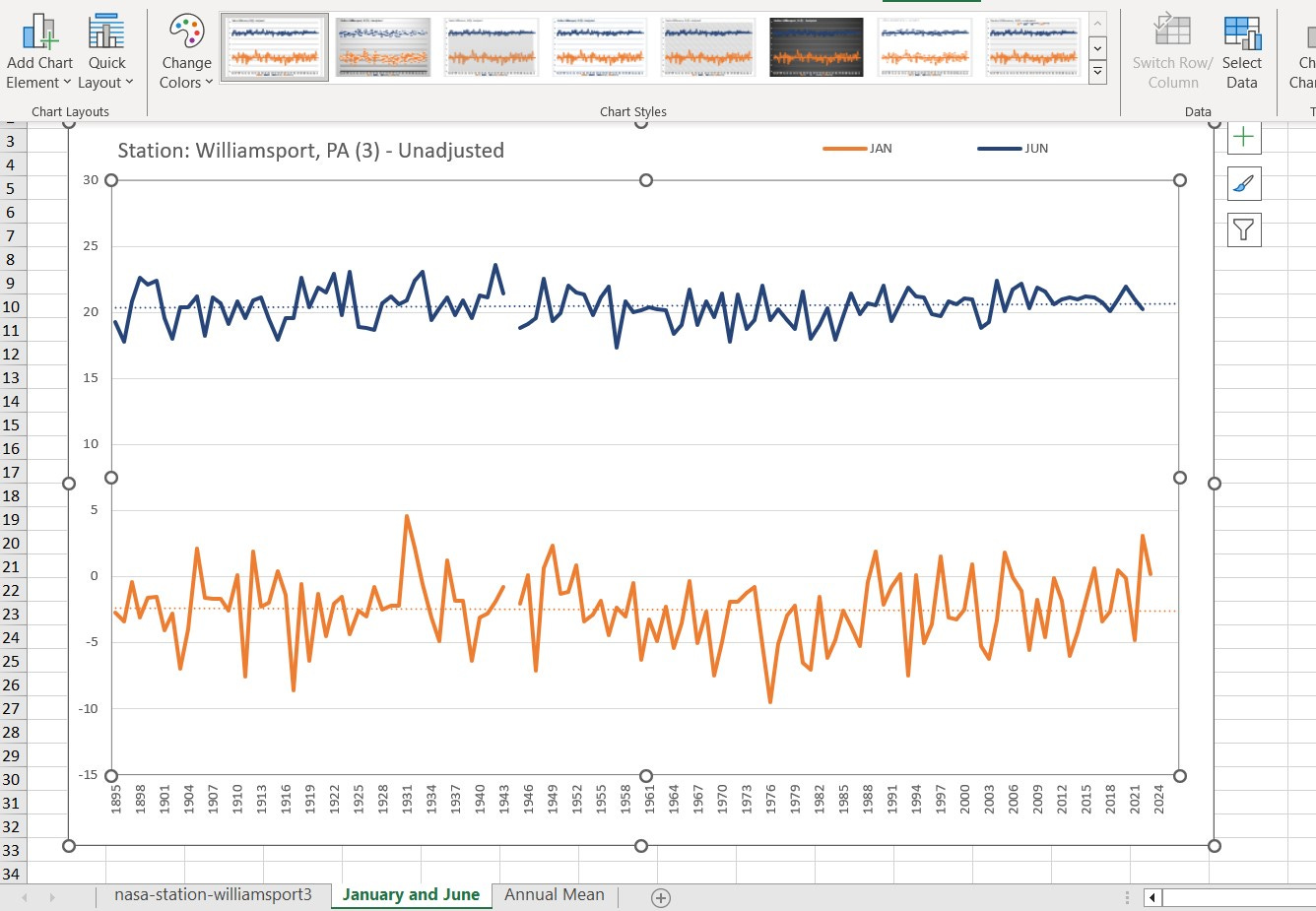
Until relatively recently, I was like most people regarding their knowledge of the concepts and science used to support the idea of climate change (aka “global warming”) - I accepted as wholly true what I was being told by “experts” though news articles.
In said articles, the science seemed clear:
Temperature data over time clearly shows the Earth to be warming.
CO2 is uncontroversially a greenhouse gas in the Earth’s atmosphere.
CO2 measurements over time clearly show its concentration in the Earth’s atmosphere to be growing.
Therefore, the increasing CO2 concentration in the atmosphere is causing an increasing greenhouse effect in the atmosphere.
Therefore, the increasing greenhouse effect in the atmosphere is causing the warming observed in the temperature data.
This is very easy for anyone and everyone to understand. 1-4 are mostly verifiable and uncontroversial, and 5 seems perfectly logical.
Further, in said articles, I was told that there is a virtual scientific consensus that this is all true. The consensus is so strong that the scientific community considers this science “settled,” right there alongside gravitational pull and Bernoulli's Principle1.
Given all of that, there was no reason to doubt the next logical step either; that is, we humans are ultimately causing this warming with our behaviors that result in additional CO2 being added to the atmosphere (namely, burning fossil fuels). Some media and scientists were even describing this hypothesis as “settled science” as well.
Part of me did wonder if the media wasn’t just a bit sensationalizing the climate, environmental, and weather-related effects being attributed to - and forecasts based upon - this warming, but I never doubted the supposed scientific truth(s) leading up to them.
A Wake-Up Call?
Then, the SARS-Cov-2 pandemic hit in 2020. Unlike climate change, I was immediately on top of the science and data relevant to the pandemic. What I observed was beyond frightening - And I’m not referring to anything in the science and data regarding SARS-Cov-2 or the pandemic. The beyond frightening part was how supposed “expert” scientists were so inclined to dismiss and/or bastardize basic, fundamental science before our very eyes in order to craft and deploy a narrative via a willing media, and how the combination of group-think and suppression of dissenting scientific viewpoints created the appearance of a near-consensus among scientists.
Acutely aware of the actual science, and the actual data, I knew this apparent consensus absolutely could not, and therefore did not, exist at all. But to the casual observer — as I was with regards to climate change science — the consensus regarding the pandemic appeared real.
In early 2022, once the dust finally started to settle regarding the pandemic, whenever I would see anything referencing “climate change” — an article on a warm day, or a newsletter from my town regarding actions they’re taking to combat climate change — I started to feel a little uncomfortable with the fact that my opinions regarding climate change — and climate change science — were not based on my own knowledge/understanding, but rather a blind acceptance of a narrative I had been fed.
I wanted to make sure I wasn’t falling into a group-think trap with regards to climate change like what I saw with so many others regarding the pandemic.
So, I started to dig into the science and evidence being used to support the climate change narrative. Here are the questions I sought to try to answer for myself:
Besides the greenhouse effect caused by CO2 in the atmosphere, what are the other fundamental scientific concepts involved?
Is the relationship between CO2 and surface temperature the same today as it always was, and if not, how is it different?
How are temperature measurements (for the sake of climate change science/analysis) taken today? How are unnatural effects on temperature readings accounted for? How were temperature measurements taken in the past? What are the error margins for all these temperature measurements, and how are they factored into conclusions/projections related to climate change?
Are there other rational/scientific explanations for observed changes in climate that have been directly attributed to increased CO2/GHE, and if so, how well do they explain the observed changes and can we apply Occam’s Razor to any of these?
By itself, the idea that humans can/are affecting the Earth’s climate is not necessarily bad. So, assuming that the science and evidence being used to support the climate change narrative appears to check out, on what are the dire projections for Earth and humanity based? How complete and sound are the analyses that project the dire downstream consequences of human-induced climate change?
So, what did I learn?
Here are the TL;DRs for the questions I set out to answer:
A LOT. The climate is a massively complex system of fluid dynamics, thermodynamics, other elements of physics, and chemistry (among other things) with feedback loops of non-linear effects inside of feedback loops of non-linear effects - All made even more complex by the fact that it’s not a closed system. While it’s fundamentally understood that atmospheric CO2 acts as a “greenhouse” gas and will trap some heat, this function is just a drop in the bucket of the entire climate system.
When I started writing this, the relationship I was referring to was the strong (almost perfect) correlation I see in charts between atmospheric CO2 and surface temperature since the industrial revolution. Prior to a little over 100 years ago, because direct measurements are few, temperatures and atmospheric CO2 level constructions rely on proxies, and while there is some disagreement with the proxy constructions, the most recent — and considered to be most accurate — reconstructions do indicate a relatively strong correlation going back during the last 800,000 years. Prior to that, the correlation appears weak at best, but confidence in the reconstructed values becomes less (error margins become greater) as well. One interesting note here though is, when there does appear to be a correlative relationship, it’s often CO2 following (or “being driven by,” if you believe they are related) temperature - Not temperature following (bring driven by) CO2. Bottom line is, at least during the last 800,000 years, yes, there does appear to be a correlative relationship.
Beginning in the mid to latter half of the 1800s, the US began building and collecting temperature data from a system of land-based weather stations. Later, sea-surface stations were added as well for collecting sea surface temperatures (SST). Prior to this, records of direct temperature measurements are few, and so temperatures are estimated using proxies (analyzing tree rings, for instance). Around 1970, we started getting inferred (proxied) SSTs from satellites.
For the sake of climate change science/analysis (i.e. calculating a “global average temperature” or an average temperature over some region), temperature data collected from weather stations goes through (at least) a three step process where which the temperature values are potentially changed during each step. The data is 1) “cleaned” (i.e. readings that appear to be clearly wrong and/or missing are replaced with a 999.9); then 2) “adjusted” (I’ve so far been unable to track down specific records/explanations for these adjustments); and 3) “homogenization,” which is intended to “smooth” the temperature readings between stations.
As you can imagine, this has been, and is, a great source of debate among scientists. We’ll go much deeper into this later in a follow-up part article, and I’ll probably end up doing multiple articles just on this topic alone. For now (the TL;DR): while I’m not at all saying this invalidates any climate science, this is a real problem for climate science - In the very least, from the perspective of “confidence” (or “margin of error”) with regards to surface temperatures, changes in surface temperatures, and the science based on the changes in surface temperatures.Yes. Even if we dismiss the problems regarding regional/global temperature calculations, and assume 100% confidence (0 error margin), yes, there are other competing/rational/scientific explanations for observed changes in climate that have been directly attributed to increased CO2/GHE. When you properly consider the error in temperature calculations/constructions, there are many other competing/rational/scientific explanations. Does Occam’s Razor point to any of these other explanations rather than the change in atmospheric CO2 levels being the primary driver? Broadly, I would say no, not necessarily - But on a case-by-case basis, in some cases it does in my opinion.
This one is another source of great debate, mainly because it’s ultimately 100% theoretical. Competing guesses/projections as to how the climate will actually evolve/change over time, and then another layer of competing guesses/projections as to how humans will be able to adapt to the various guesses/projections as to how the climate will actually change. There is obviously no way to know for sure how this will play out, but what we do know is that so far, the trends we have seen regarding the human existence/condition since the industrial revolution, when some climate scientists say we began affecting the climate, have been overwhelmingly positive. So, so far, observed trends (reality) have been running exactly counter to any dire and alarmist projections for humanity with regards to climate change.
And here is the overall TL;DR:
CO2 is uncontroversially a greenhouse gas. In absolute terms, humans are impacting things that are factors that ultimately impact the climate. Therefore, it is likely that humans are impacting the climate, to some degree. With that said, regardless of what you hear:
While it’s virtually certain that we humans are impacting atmospheric CO2 levels, and while the idea that we’re impacting them to a significant degree is fairly well supported, from a scientific perspective, that we’re impacting them to a significant degree is in fact still a hypothesis, and not “settled science” by any means.
The idea that the concentration/level of CO2 in the atmosphere significantly impacts surface temperatures, while still possibly true, is unequivocally still a mere hypothesis that is not even remotely close to anything that an honest scientist would deem “settled science.” The net effect — that is, the effect after all things considered — of the atmospheric CO2 level on temperatures, whether that be some calculated global average temperature, or a temperature at a given place and time, is something we humans are not even close to fully understanding.
So, when you honestly assess the big, overarching hypothesis that “humans are driving climate change,” while it’s not accurate to say it’s been disproven, when you consider all the issues and uncertainty (error margin) regarding the measurements and calculations to estimate what we think are the observed changes, along with the fact that we are only beginning to scratch the surface of understanding the full system of the Earth’s climate, we are not even remotely close to being able to say, with confidence, that humans are driving climate change.
Anyone — or any group — that tells you that the science overwhelmingly supports either the idea that “humans are driving climate change” or the idea that “humans are not driving climate change” is either uninformed or dishonest, and you should not listen to them.2
The Bottom Line
The most accurate/honest way to characterize our current understanding is this: “1) While the degree could still be immeasurably small at this point, there is a reasonably-sound scientific understanding to support the idea that humans are affecting the climate to some degree; and 2) There is some science (scientific evidence) to support the hypothesis that humans could be having a measurable effect on the changes we think we’re detecting in the climate, but we are still not close to a point where we can say that this hypothesis is, scientifically, most likely true”
Author’s Note: This will serve as an introductory article into a series of articles where I try to translate the current state of the science into terms everyone can understand — but without oversimplifying and losing accuracy (like we see with news articles) — while objectively analyzing the debates regarding the science and what the science means. At this point, I’m planning the following series of articles (subject to change), which closely follows the questions I’ve set out to answer:
Part 2: Climate Change: An Honest Assessment of What We Know, Think We Know, and Don’t Know
Part 3: The Journeys Climate Temperatures Take: Recording, Cleaning, Adjusting, Smoothing, Homogenizing, Calculating…
Part 4: The Underbelly of Climate Science: The Dirty Fight to Control the Narrative
Part 5: Climate Science: The Path to Regaining Trust
https://www.teachengineering.org/populartopics/bernoulli
Note: This is specifically regarding the current state of the science, and does not apply to individual opinions. In other words, I’m not suggesting that anyone (or any group) merely stating their belief that “humans are driving climate change” or “humans are not driving climate change” should disqualify them. One can hold the belief that “humans are driving climate change,” or that “humans are not driving climate change,” while at the same time understanding that the science does not at this point overwhelmingly support their belief.